
Posted on October 2, 2026
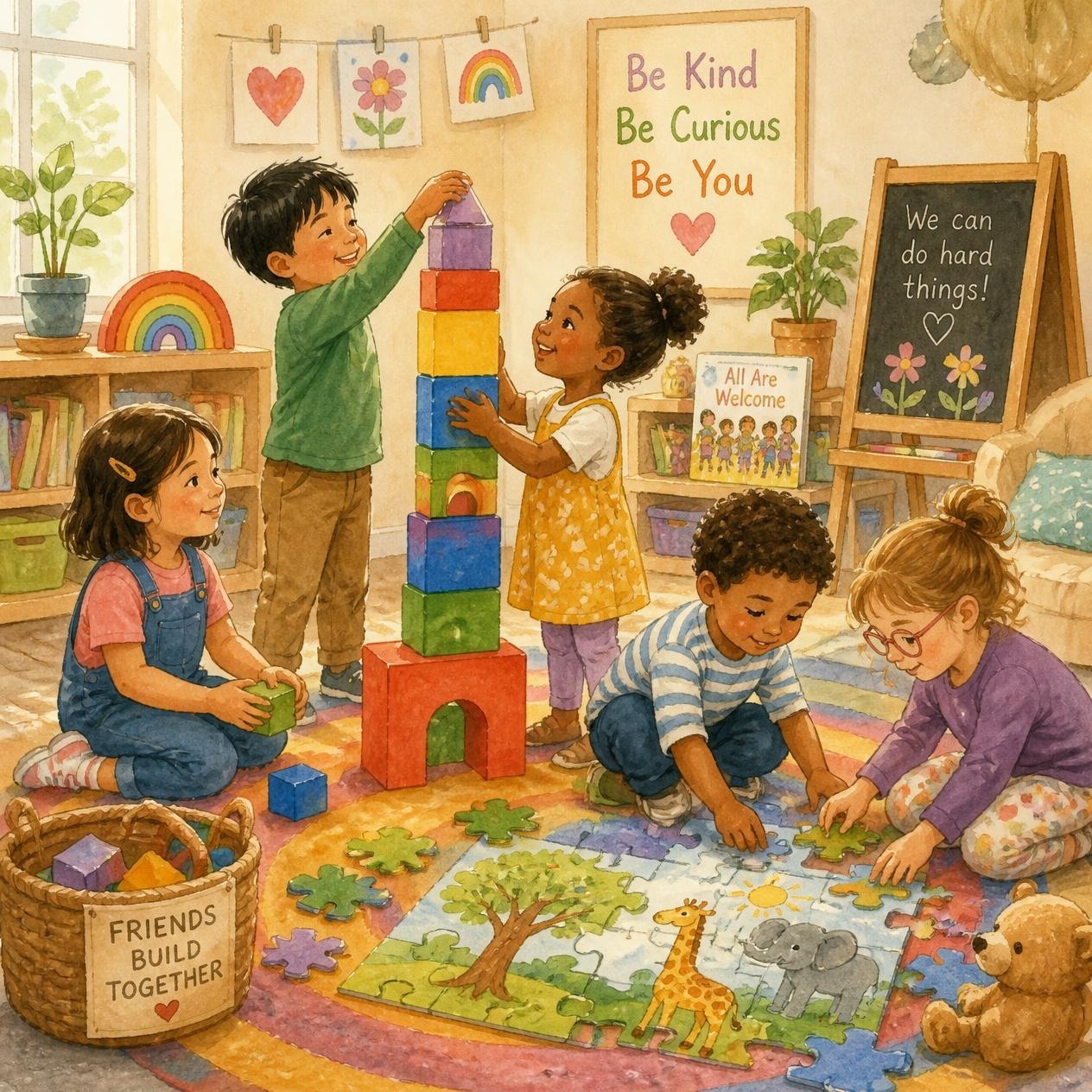
Children learn much more than academic skills during their early years. They are also discovering how to understand their emotions, communicate with peers, solve problems, and build healthy relationships. In fact, introducing social-emotional learning activities provides a vital foundation for these abilities, helping young learners develop the skills they need to navigate friendships and everyday challenges.
Two of the most effective ways to introduce these concepts are through kindness and teamwork. Kindness teaches children to recognize the feelings and needs of others, while teamwork helps them understand cooperation, communication, and shared responsibility. When these values are woven into daily routines, children have meaningful opportunities to practice empathy in action.
Understanding Social-Emotional Learning Activities in the Classroom
Stories, daily classroom routines, guided play, and group projects provide natural avenues for emotional growth. A story about a character helping a friend, for example, can encourage rich conversations about empathy and compassion.
In addition, cooperative games allow children to practice taking turns, active listening, sharing materials, and resolving minor disagreements peacefully. Rather than simply instructing children to “be kind” or “work together,” educators can design interactive social-emotional learning activities where children actively experience what empathy and teamwork look and feel like in real time.
Teaching Kindness Through Everyday Actions
Kindness begins with small, observable habits. Teachers and parents can model thoughtful behavior throughout the day. Saying “thank you,” listening attentively, acknowledging someone’s feelings, and helping a struggling student demonstrate compassion in ways children can naturally imitate.
Furthermore, picture books serve as powerful vehicles for exploring kindness. Through engaging illustrations and relatable characters, books allow children to observe social situations and emotional experiences safely. Heartwarming stories like Cookie’s Sweetest Day show young readers how gentle gestures can brighten someone’s whole day.
When reading together, adults can ask thought-provoking questions:
- “How do you think the character feels right now?”
- “What could a friend do to help in this situation?”
- “What would you do if you were in their shoes?”
Building Teamwork and Cooperation Through Play
Young children naturally learn through play, making collaborative projects an enjoyable way to cultivate teamwork. Group puzzles, block-building challenges, dramatic play, and collaborative art projects encourage children to work toward a shared goal.
During these interactive sessions, children discover that teamwork requires more than simply sitting in the same circle. They must communicate clearly, listen to one another, share resources, negotiate roles, and compromise. These playful experiences provide valuable practice for handling collaboration and problem-solving later in life. For research-backed guidance on supporting childhood development, resources from Zero to Three offer practical tools for parents and teachers.
Using Picture Books to Encourage Empathy and Visual Literacy
Children’s literature offers an engaging way to introduce social and emotional concepts. Picture books are particularly effective because illustrations provide non-verbal information about characters’ feelings, relationships, and environments.
When reading a storybook, educators can pause to examine facial expressions, posture, colors, and background details. This technique bridges emotional growth with visual literacy, encouraging children to interpret artistic cues alongside written words. To discover more about using storytelling to inspire young minds, visit the About Sonia GT page.
Creating a Lasting Culture of Kindness
Ultimately, social-emotional learning activities are most transformative when kindness and teamwork become part of the classroom culture rather than occasional lessons. Establishing routines that celebrate positive peer interactions helps children understand that their choices matter.
It is equally important to remember that these skills develop gradually. Children will make mistakes, disagree, and experience big emotions. By viewing these moments as opportunities for patient guidance, we help children grow into compassionate, confident individuals who care deeply for themselves and those around them.