
Posted on September 22, 2026
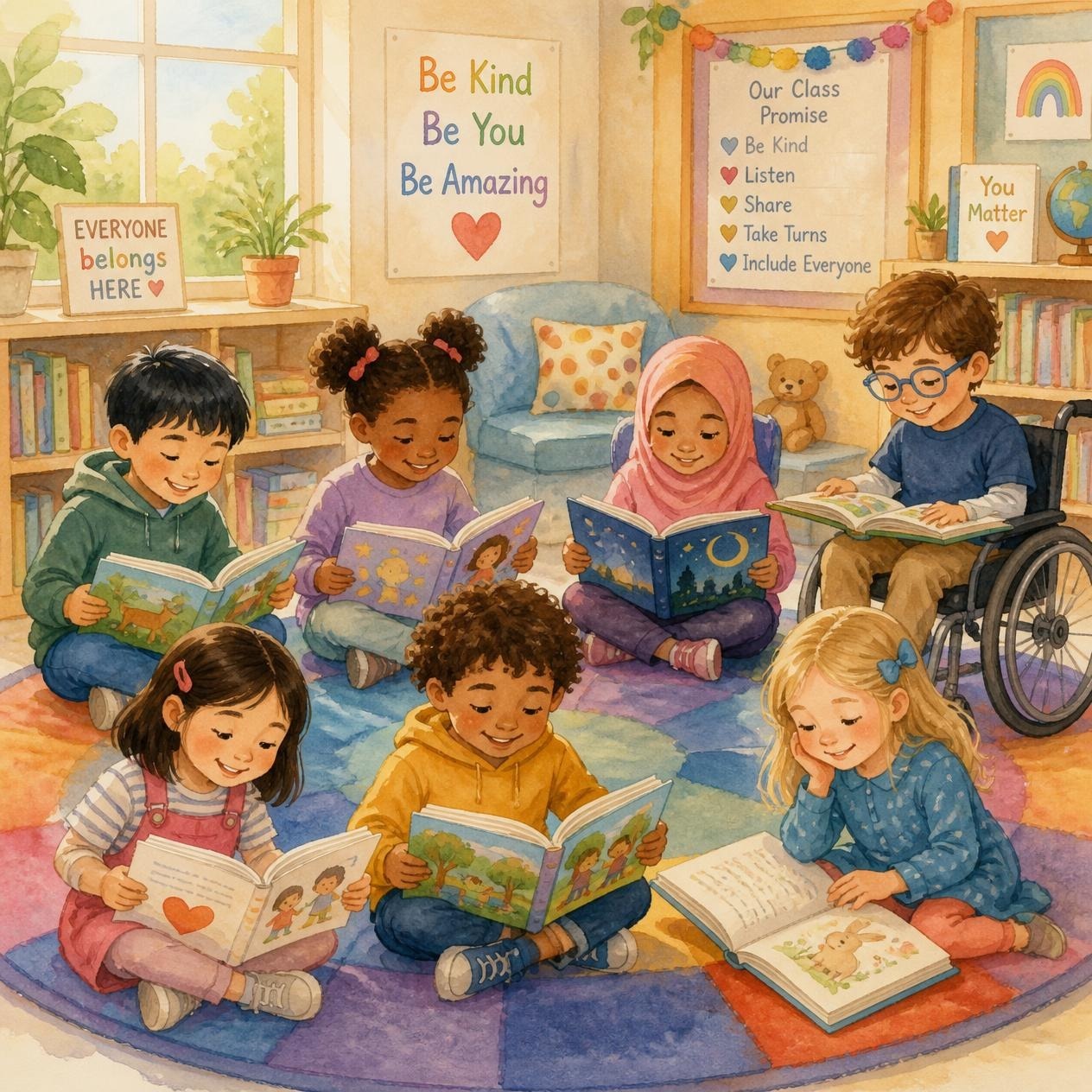
Books have the remarkable ability to help young minds understand themselves, discover the experiences of others, and recognize that every person has a story worth hearing. In early childhood education, literature is far more than entertainment or a tool for vocabulary building. In fact, using inclusive picture books can transform a learning space into an environment of belonging, curiosity, and mutual respect.
Through carefully balanced words and expressive illustrations, diverse stories allow young children to explore identity, community, culture, and difference in ways that feel safe, welcoming, and empowering.
Why Inclusive Picture Books Build Confidence and Identity
For many young learners, seeing themselves authentically represented on the page is an affirming experience. A child may recognize their cultural traditions, physical appearance, family structure, language, or abilities in a character. As a result, that recognition sends an essential emotional message: “People like me belong here.”
Meaningful representation strengthens self-esteem and fosters a positive self-identity from an early age. When children regularly see peers who mirror their own lived experiences depicted with dignity and joy, they are far less likely to feel that their daily reality is unusual or unimportant.
Teaching Empathy and Connection Through Diverse Characters
However, genuine inclusion in children’s literature is not only about seeing oneself reflected. In addition, it is about learning to understand, respect, and celebrate others.
Encountering characters with different life experiences—such as a child navigating a disability, celebrating an unfamiliar holiday, or speaking another language—encourages natural curiosity rather than hesitation. Through storytelling, young learners develop empathy and kindness in an organic, gentle manner. Heartwarming stories like Cookie’s Sweetest Day illustrate how friendship, warmth, and shared joy connect children of all backgrounds.
Developing Visual Literacy in Early Childhood Classrooms
Visual literacy plays a crucial role in how children interpret literature before they can read written words fluently. Young children naturally interpret:
- Facial expressions and subtle body language
- Color choices, lighting, and mood
- Environmental settings and symbolic cultural details
Therefore, the artwork inside picture books carries immense communicative weight. When educators and parents ask thoughtful open-ended questions—such as “What do you notice about this picture?” or “How do you think the character feels based on their expression?”—children become active critical thinkers rather than passive listeners.
To read more about using stories to nurture young hearts, explore our About the Author page to learn about Sonia GT mission.
The Value of Meaningful, Multi-Dimensional Representation
Quality matters just as much as presence. Simply placing a diverse character in the background is not enough if that individual is defined solely by a single difference or stereotype.
Instead, meaningful representation allows characters from every background to lead the adventure, solve challenges, share laughs, and experience everyday childhood routines. When characters possess multidimensional personalities, young readers grasp that every person carries unique depth, talents, and dreams. For research-backed frameworks on selecting inclusive literature, organizations like Social Justice Books offer helpful evaluation guidelines for educators and parents.
Fostering Belonging Through Inclusive Picture Books
Ultimately, creating inclusive spaces through literature invites children to appreciate both individuality and shared human connection. A classroom bookshelf enriched with diverse voices proves to every student that their identity is recognized and celebrated.
By placing thoughtful, inclusive picture books in children’s hands, we do much more than share stories. We help children cultivate empathy, build confidence, question stereotypes, and envision a community where belonging is a gift everyone shares.